The Dead We Knew: Beginner Day 1 Shelter & Survival Guide
Survive your first night in The Dead We Knew. Essential beginner guide covering cabin construction, tool crafting, campfires, hunger, and warmth management.
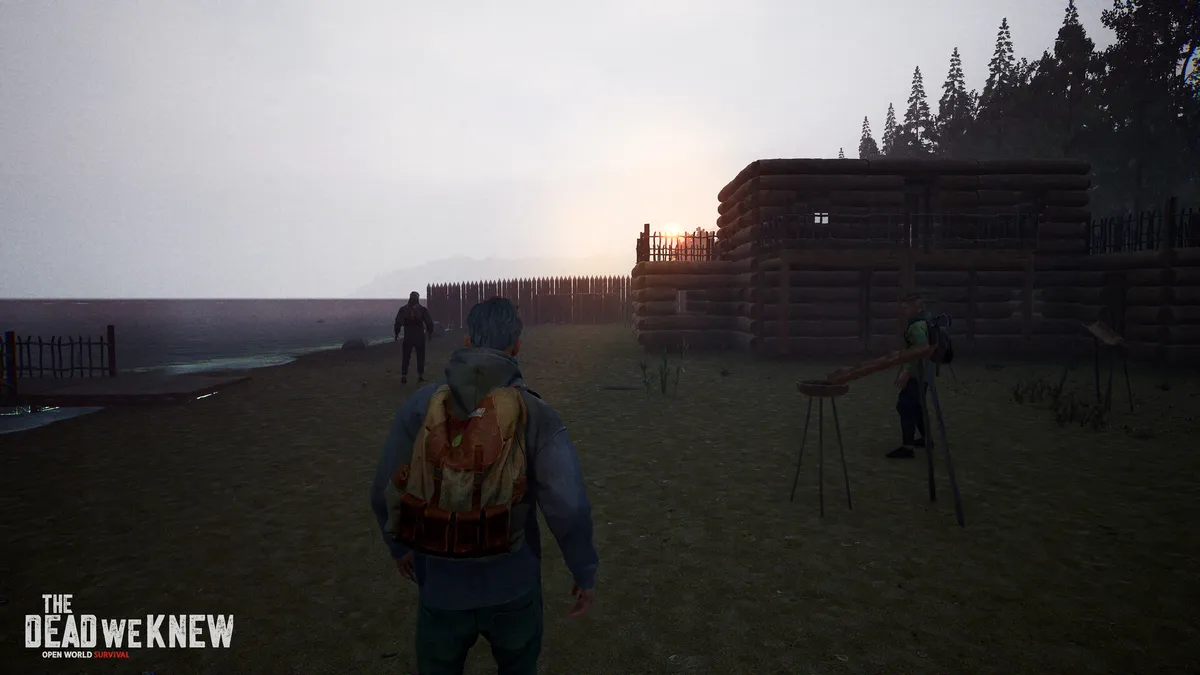
Waking up empty-handed in the misty backwoods of THE DEAD WE KNEW: Open World Survival can be disorienting. You have approximately twelve real-time minutes before the sun dips below the pine horizon, plunging the landscape into freezing darkness and awakening wandering infected.
Your objective on Day 1 is singular: gather fundamental raw resources, fashion primitive harvesting tools, establish a weatherproof wooden shelter, light a self-sustaining campfire, and place a bedroll to secure your spawn point.
1. The Survival HUD & Vital Parameters
Before sprinting into the dense forest, memorize the four critical survival gauges located at the bottom left of your heads-up display:
  ┌────────────────────────────────────────────────────────┐
  │  [Health]       ████████████████████ 100/100           │
  │  [Hunger]       ██████████████░░░░░░  70/100           │
  │  [Hydration]    ██████████░░░░░░░░░░  50/100           │
  │  [Body Temp]    36.6°C  [Status: Optimal]              │
└────────────────────────────────────────────────────────┘- Health (HP): Depleted by zombie bites, falls, bleeding lacerations, and hypothermia. Requires bandages or herbal poultices to regenerate.
- Hunger: Decreases steadily with physical exertion (sprinting, chopping trees). Dropping below 20% incurs severe stamina regeneration penalties.
- Hydration: Drains faster during warm daylight hours. Never drink unboiled river water directly unless you carry water purification tablets.
- Body Temperature: Dropping into hypothermic conditions (below 35.0°C) causes teeth chattering, screen blurring, and gradual health loss.
2. Minute 0 to 4: The Scavenger’s Scramble
Immediately look around your spawn location. Do not wander deep into overgrown ravines or approach abandoned road vehicles until you have basic defensive implements.
| Item Name | Harvest Source | Quantity Needed | Crafting Recipe Use |
|---|---|---|---|
| Loose Stones | Riverbanks, gravel trails, rock clusters | 6 Stones | Stone Axe, Stone Pickaxe, Fire Ring |
| Wood Sticks | Forest ground, small dry shrubbery | 10 Sticks | Tool handles, kindling, torches |
| Plant Fiber | Tall green grass, wild hemp bushes | 12 Fibers | Improvised cordage, cloth bandages |
| Flint Shards | Large boulder strikes, shoreline shale | 2 Shards | Firestriker, sharpened knife blade |
Essential Tool Progression
- Open your inventory crafting grid (
TaborI). - Combine 4 Plant Fibers to craft 1 Improvised Cordage.
- Combine 2 Stones + 3 Sticks + 1 Cordage to craft your first Stone Hatchet.
- Equip the hatchet to your quickbar (
Key 1). You can now fell standing birch and pine trees in seconds instead of punching bark.
3. Minute 4 to 8: Selecting Cabin Real Estate
Not all terrain in the wilderness is created equal. Setting up your base in the wrong biome will make subsequent days exponentially more difficult:
Ideal Base Location Checklist
- Elevated Ground: Build on a low plateau or gentle hill. Lowland swamps accumulate thick fog faster and retain humidity that accelerates hypothermia.
- Freshwater Proximity: Settle within a 60-second jog of a clean lake or running creek for your water boiling and tomato garden hydration loops.
- Natural Bottlenecks: Look for rock faces or cliff ledges that protect the rear of your cabin, cutting required defensive walls in half.
- Avoid Main Asphalt Roads: Hostile human scavenger patrols frequently walk along tarmac roadways and will raid exposed cabins.
4. Minute 8 to 12: Constructing the First Cabin
Once you have chopped 30–40 logs of timber, open the Building Menu (Key B):
- Place 4 Wooden Foundation Pillars: Level them carefully against the ground slope.
- Lay Down 4 Wooden Floor Planks: Creates the dry insulated floorboard base.
- Erect 3 Solid Walls and 1 Doorway Wall: Keep windows minimal on Day 1 to avoid giving line-of-sight to prowling scavengers.
- Install a Wooden Door with Latch: Keep doors locked at dusk.
- Snap Slanted Roof Tiles: Prevents freezing rain from extinguishing indoor campfires.
       ┌──────────────────────────────┐
       │         Slanted Roof         │
  ┌────┴──────────────────────────────┴────┐
  │                                        │
  │  [ Storage Chest ]     [ Campfire ]    │
  │                                        │
  │  [ Straw Bedroll ]     [ Solid Door ]  │
  └───────────────────────────┬────────────┘
                              ▼
                         Base Entrance
5. Nightfall Protocol: Fire, Warmth & Respawn Point
As twilight fades into total blackness, follow this non-negotiable dusk checklist:
Step 1: Craft and Deploy the Straw Bedroll
- Recipe: 8 Dry Grass + 4 Plant Cordage + 2 Animal Pelts (or 4 Cloth Rags).
- Interact with the bedroll to Set Spawn Point. If you perish during the night, you will respawn warm inside your shelter rather than across the map.
Step 2: Build the Indoor Stone Fireplace
- Place the campfire in the center of your shelter away from flammable door openings.
- Feed it with Dry Kindling and Hardwood Logs. A full fire stack will burn for 8 real-time minutes, radiating warmth in a 5-meter radius and keeping room temperatures above 20°C.
Step 3: Noise & Light Discipline
- When dense fog settles outside, infected rely heavily on visual illumination. Extinguish handheld torches and do not craft loudly inside the cabin if you hear rhythmic shuffling on your porch.